
International Graduate School of Neuroscience
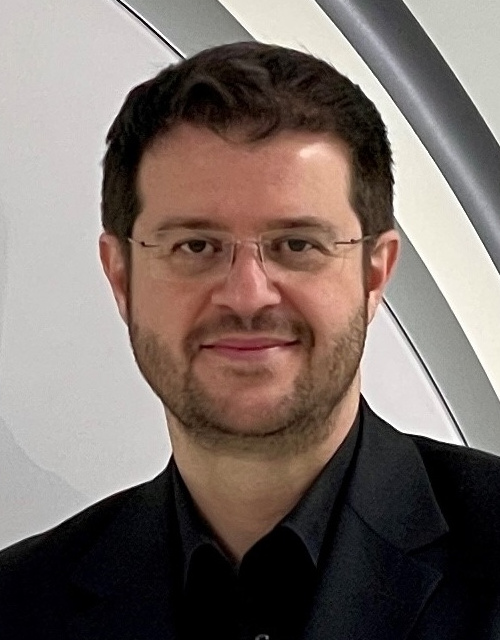
Prof. Dr. Erhan Genç
Leibniz Research Centre for Working Environment and Human Factors (IfADo)
Research Group Neuroimaging and Interindividual Differences
Ardeystraße 67
44139 Dortmund
Germany
Orcid: 0000-0001-6514-5479
Research Interests
Our research investigates why individuals differ in cognitive abilities and how these differences relate to the structure and function of the human brain. We combine multimodal magnetic resonance imaging (MRI), psychometric assessment, electrophysiology, genetic data, and non-invasive brain stimulation to link individual cognitive profiles to their underlying neural mechanisms.
A major focus is on individual differences in intelligence, learning, and memory. We examine how brain microstructure, structural and functional connectivity, and neural processing efficiency contribute to cognitive performance. Using large cohorts and longitudinal data, we also investigate relationships between genetic variation, brain characteristics, and cognition.
A second focus is ultra-high-field 7-tesla MRI and precision neuroimaging. High-resolution structural and functional imaging allows us to investigate cortical depth-dependent and laminar organisation, with a particular interest in memory-related networks and the medial temporal lobe. Within the DFG Research Unit “Layers of Memory”, we study how this organisation relates to memory formation, retrieval, and modification, and how connectivity patterns vary across individuals.
A third focus is individualised non-invasive brain stimulation with MRI-based readouts. We investigate how individual anatomy, functional network organisation, and physiological state shape responses to stimulation. Concurrent TMS–fMRI enables us to characterise stimulation-induced effects at the local and distributed network levels. By combining MRI-informed targeting, neuronavigation, and electric-field modelling, we aim to develop more precise stimulation approaches and better understand variability in their effects. We are also developing MRI-guided approaches to transcranial ultrasound stimulation.
Across these research areas, our goal is to connect the characterisation of individual differences with mechanistic investigations of human cognition. Potential doctoral projects span cognitive individual differences, high-resolution 7T neuroimaging, brain connectivity, and personalised neuromodulation.